Laureate 2025
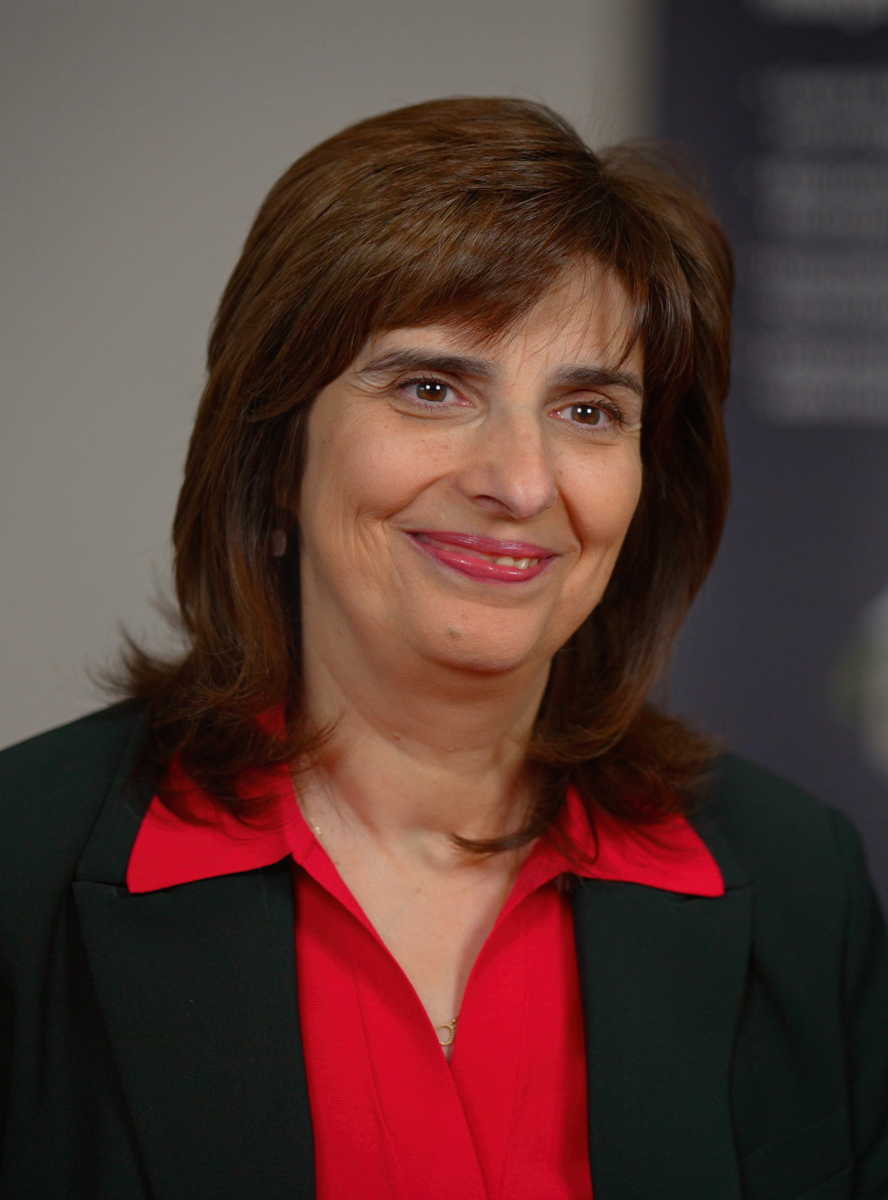
Albena Jordanova
Affiliation at the time of the Award : Group Leader - VIB-UAntwerp. Professor - UAntwerp. Professor - Sofia Medical University, Bulgaria.
Born : 4 July 1969
This year, the Generet Award goes to Prof. Dr Albena Jordanova of the VIB‑UAntwerp Center for Molecular Neurology, for her in‑depth and innovative research into Charcot‑Marie‑Tooth (CMT) disease - a hereditary nerve disorder that progressively undermines patients’ daily lives.
Prof. Dr Albena Jordanova studies the rare Charcot‑Marie‑Tooth disease, or CMT. The disease affects one in 2,000 individuals and is the most common hereditary disorder of the peripheral nervous system. Jordanova and her team study a very specific form of CMT - found in only six families worldwide - caused by mutations in tyrosyl‑tRNA synthetase, a protein that is absolutely essential for the survival of every cell in our body.
In CMT, however, only peripheral nerve cells are affected. The fundamental aim of the research is to understand why mutations in this protein can cause an age‑related disease that affects exclusively the peripheral nervous system. The peripheral nervous system connects the brain and spinal cord to the rest of the body. It consists of very long neurons, which can be up to one metre in length, making them particularly vulnerable. There are genetic diseases, known as hereditary peripheral neuropathies, in which people are born with mutations that lead to the degeneration of these peripheral nerves. In such patients, symptoms can begin in childhood, including the loss of muscular control, impaired sense of touch, and reduced ability to perceive temperature.
What starts as subtle problems with balance or muscle strength often evolves into serious mobility limitations and could eventually lead to skeletal deformities. Activities that seem obvious - walking longer distances, climbing stairs, buttoning a shirt - gradually become challenges. Many patients eventually become wheelchair users and live with chronic pain and fatigue. “CMT is a troublesome and sometimes painful condition, but it is not life‑shortening - although you do have to adapt your quality of life along the way,” says Alexander Leysen, Vice‑Chair of Spierziekten Vlaanderen.
Prof. Jordanova has devoted her entire career to this research. She finds her motivation in the generosity of patients and families who donate blood samples and nerve tissue to make progress possible. Carole Haislip, herself a CMT patient, puts it succinctly: “Knowing that we can help to understand how the different forms of CMT actually cause disease - and to test possible treatments - gives us hope, also for future generations in our family and in others.”
Prof. Dr Albena Jordanova studies the rare Charcot‑Marie‑Tooth disease, or CMT. The disease affects one in 2,000 individuals and is the most common hereditary disorder of the peripheral nervous system. Jordanova and her team study a very specific form of CMT - found in only six families worldwide - caused by mutations in tyrosyl‑tRNA synthetase, a protein that is absolutely essential for the survival of every cell in our body.
In CMT, however, only peripheral nerve cells are affected. The fundamental aim of the research is to understand why mutations in this protein can cause an age‑related disease that affects exclusively the peripheral nervous system. The peripheral nervous system connects the brain and spinal cord to the rest of the body. It consists of very long neurons, which can be up to one metre in length, making them particularly vulnerable. There are genetic diseases, known as hereditary peripheral neuropathies, in which people are born with mutations that lead to the degeneration of these peripheral nerves. In such patients, symptoms can begin in childhood, including the loss of muscular control, impaired sense of touch, and reduced ability to perceive temperature.
What starts as subtle problems with balance or muscle strength often evolves into serious mobility limitations and could eventually lead to skeletal deformities. Activities that seem obvious - walking longer distances, climbing stairs, buttoning a shirt - gradually become challenges. Many patients eventually become wheelchair users and live with chronic pain and fatigue. “CMT is a troublesome and sometimes painful condition, but it is not life‑shortening - although you do have to adapt your quality of life along the way,” says Alexander Leysen, Vice‑Chair of Spierziekten Vlaanderen.
Patient‑driven science across generations
Prof. Jordanova has worked closely for years with families affected by the disease. She follows them across several generations and examines their genetic material to understand why the disease develops and how different forms arise. Families are often left with questions: Why us? How quickly will the disease progress? And will there ever be a treatment?
Prof. Jordanova has devoted her entire career to this research. She finds her motivation in the generosity of patients and families who donate blood samples and nerve tissue to make progress possible. Carole Haislip, herself a CMT patient, puts it succinctly: “Knowing that we can help to understand how the different forms of CMT actually cause disease - and to test possible treatments - gives us hope, also for future generations in our family and in others.”
A research boost to accelerate progress
With the €1 million Generet Award, Prof. Jordanova’s team can shift into a higher gear. Her project aims to:
- Unravel the biological mechanisms that cause nerves to degenerate in CMT.
- Test innovative ideas more rapidly, paving the way for future treatments.
- Strengthen international and interdisciplinary collaboration, including with clinicians (Dr F. P. Thomas, Hackensack Meridian School of Medicine, USA, and Dr I. Tournev, Medical University‑Sofia, Bulgaria), researchers (the team of Dr C. Várnai, University of Birmingham, UK), and patients via the Hereditary Neuropathy Foundation.
Press release of the King Baudouin Foundation